Shopify technical SEO, fixed in the theme code
Duplicate product paths, filter URLs and broken structured data hold back stores that already have good products. I find these problems and fix them in your Liquid code.
Signs you need Shopify technical seo
What you get
From $350 per sprint. Scoped on a call, fixed in writing before work starts.
01Internal link path cleanup
Collection grids link to /products/handle, not the /collections/x/products/handle path. That one change removes a large source of duplicate URLs.
02Faceted navigation control
Filter and tag URLs are noindexed or kept out of the crawl, while the filter combinations people actually search for stay indexable.
03robots.txt.liquid
Custom crawl rules for search, cart, checkout and filter parameters, written carefully so nothing important gets blocked.
04Structured data
Product, Offer, AggregateRating, BreadcrumbList, Organization and FAQ schema in JSON-LD, validated against Google’s requirements.
05Redirect & 404 hygiene
Redirect chains removed, high-value 404s recovered, and discontinued products handled without losing their rankings.
06Template-level speed
Render-blocking scripts deferred, images sized correctly, and fonts and app embeds trimmed on each template.
How I approach Shopify Technical SEO
Written by Saqib Ali, Shopify SEO lead & developer at Globe Skillz. Updated November 2026.

Saqib Ali
Shopify SEO & development since 2019. 180+ projects across 42 countries.
The five Shopify issues I fix most often
| Issue | Why it hurts | The fix |
|---|---|---|
| Collection-aware product URLs | Splits link equity and crawl budget across copies of the same product | Change product.url logic in the product-card snippet |
| Indexed tag pages | Hundreds of thin, near-duplicate pages | Conditional noindex on current_tags |
| Missing or broken Product schema | Lost rich results and lower click-through rate | One JSON-LD block that includes variants and offers |
| Leftover app scripts | Slower LCP and INP on every template | Audit theme.liquid and app embeds, then remove the dead code |
| Hreflang across Markets | The wrong country version ranks | Check Markets domains, subfolders and alternate tags |
Developer discipline
Every change is made on a duplicate theme, reviewed, and published only after it’s been tested. You get a changelog of what changed and why, so your next developer won’t undo it by accident.
Results from a real client
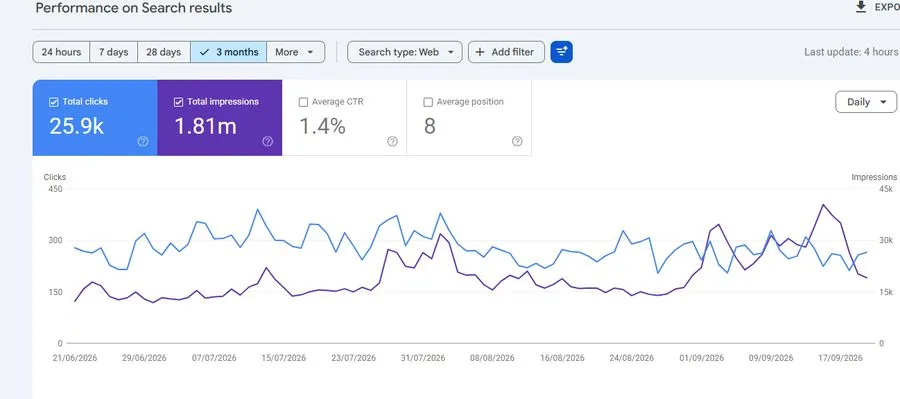
Online bookstore
Large catalog, thousands of product URLs. Indexation control and collection-led rankings.
- Clicks
- 25.9K
- Impr.
- 1.81M
- CTR
- 1.4%
- Pos.
- 8.0
Can you edit robots.txt on Shopify?
Yes, through the robots.txt.liquid template. It’s easy to break things, so I only add rules that solve a specific problem I’ve confirmed in Search Console.
Should Shopify tag pages be indexed?
Usually not. Most tag pages are thin filtered views. The exception is a tag combination that matches real search demand. In that case it’s usually better to create a dedicated collection for it.
Will technical fixes break my theme?
No. All work happens on a duplicate theme first and is tested before it’s published. You can roll back with one click.
Do you work on headless Shopify (Hydrogen)?
Yes, for technical SEO reviews: rendering, routing, canonicals and sitemaps. Large Hydrogen builds are scoped on a case-by-case basis.
Often paired with
Want to know what’s holding your store back?
Send me your store URL. I’ll record a short review of the biggest SEO and technical issues I can find — free, and yours to keep whether we work together or not.